Serge Ferrari — Sample-to-bulk handoffs
A coated architectural textile moves from a named reference to an order only when the brief, the specimen, and the approval notes stay in one trail.
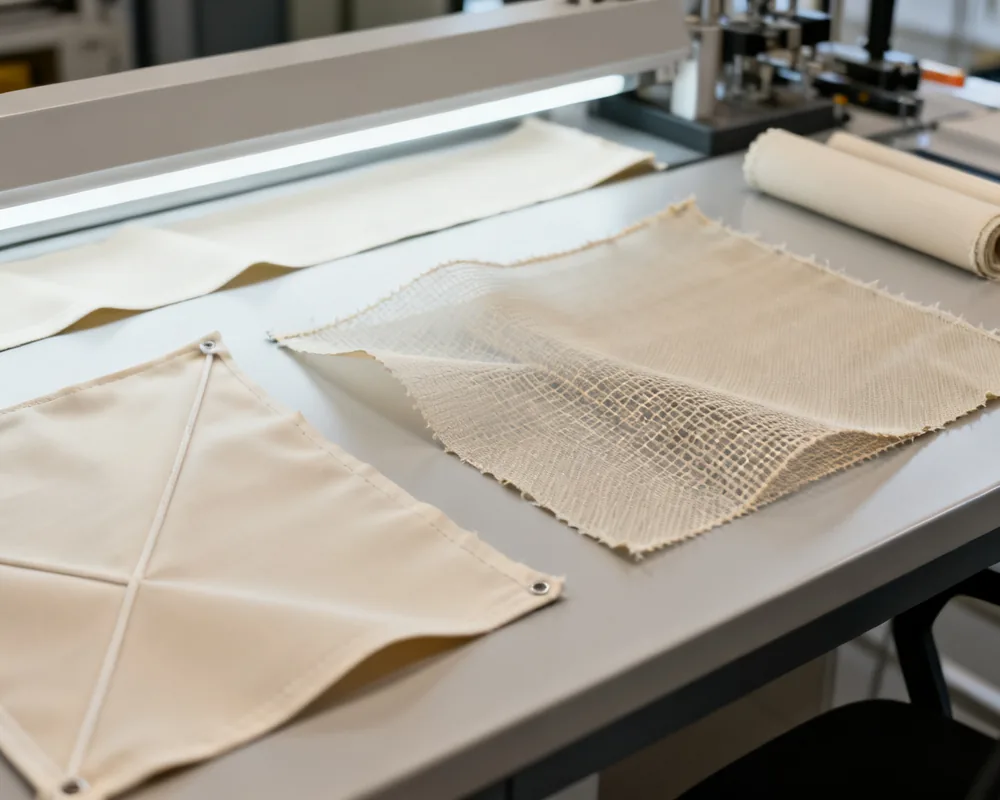
- Brief
- Sample
- Approval
- Order context
A coated architectural textile moves from a named reference to an order only when the brief, the specimen, and the approval notes stay in one trail.
Write the fibre route, the base cloth, and whether the build is a coated face, a film laminate, or a protective industrial textile. State the architectural job in plain language: solar screen, tensile canopy, awning, outdoor seating, or a cover that must resist a named exposure. Add a GSM target only as a target, with units, and note usable width separately from the full cloth width. If the enquiry starts from a phrase such as Serge Ferrari shade fabric or tensile fabric, keep that phrase as a locator and still list construction, finish, and colour reference. Open questions belong in the brief, not in guessed numbers.
Place the submitted swatch next to the brief and record what is actually in hand: face, backing, edge, and handle. A small cutting can show colour direction and surface grain, yet it cannot settle roll width, coating uniformity, or batch shade. Compare the cutting with the stated use. Seating cloth is judged for contact and abrasion context. Shade cloth is judged for openness, light, and weather exposure as separate topics. If the swatch and the written reference disagree, say which one the next review should follow.
Keep the shade standard, the handle notes, and the finish description together with a date. Approval language should name the specimen state, including whether the coating or backing was present. Do not treat a development cutting as if it were cloth from a later production lot. When a buyer mentions Soltis, Soltis Proof 502, or Batyline, record that name beside the physical reference rather than assuming the name alone fixes composition, width, or performance. The approval record is a comparison tool, not a certificate and not a promise of later equivalence.
Quantity, destination, and requested timing describe the commercial frame. They do not replace the material frame. Ask which supply format applies to this textile: roll, cut length, or another package, and leave timing unmarked until it is confirmed for that reference. Roll identification and packing notes should be requested where rolls are the relevant format. A sample conversation does not set a minimum, a stock position, or a delivery date. Confirm those points only when an order-specific reply exists.
A service conversation stays usable when the material question, the sample question and the order question are written on separate lines. Composition, construction, GSM, usable width and finish describe the textile. Quantity, destination and requested timing describe the commercial request. A target requirement is not a reported result, and a page statement is not a batch approval.
| Request | Include | Keep separate |
|---|---|---|
| Sample discussion | Reference, colour direction and intended use | A screen image is not the approval standard |
| Specification question | Composition, construction, GSM, usable width and finish | An unknown value stays blank |
| Availability question | Material reference and the quantity under discussion | A catalogue page is not a delivery promise |
| Order context | Destination and the decision that still needs an answer | Do not merge it into the sample record |
Share the sample reference and the order context that still needs a decision.