Material inquiry
Serge Ferrari — Tell us what the fabric needs to do
Material inquiry
Describe the setting in your own words: facade shade, tensile canopy, awning, outdoor seat, or a protective cover. Mention sun, rain, cleaning, and how panels will be joined. A screen that hangs in front of glazing is not reviewed the same way as a tensioned surface or a cloth that people sit on. Name the stress that should lead the comparison, and leave unrelated performance topics out of the first paragraph so the reply can stay specific.
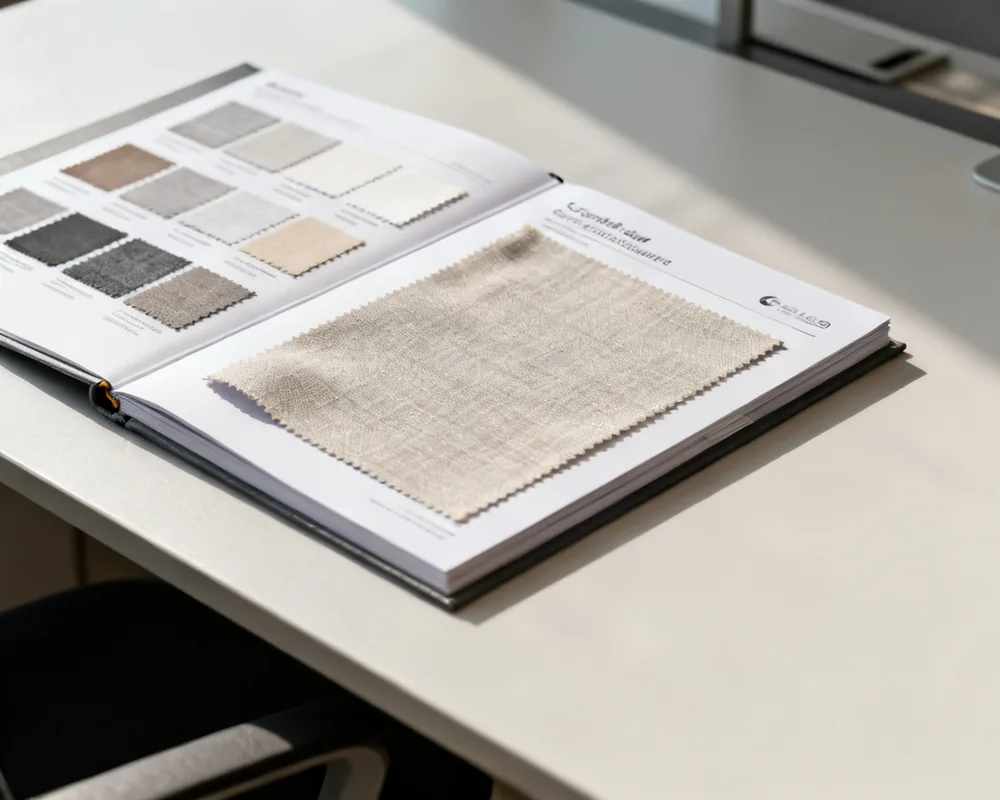
A reference name or a physical sample can clarify the request. Add construction, finish, backing, and colour context when you know them. A Soltis, Soltis Proof 502, or Batyline phrase can locate the file. It still does not replace fibre route, coating or film, usable width, or the specimen in hand. If you are unsure whether the build is coated or laminated, say so instead of choosing a word that may not fit. A photo of the edge can help, while a screenshot of a colour on a monitor should not stand in for a physical shade reference.
Tell us what you need to compare: a mass target in grams per square metre, cuttable width in centimetres, surface finish, or a method-specific result. Keep the target in one sentence and any reported figure in another, with the method and specimen state beside the figure. Composition, when you know it, should be a percentage by mass. Yarn linear density belongs in dtex or denier, where 1 dtex is 1 gram per 10,000 metres and 1 denier is 1 gram per 9,000 metres. If conditioning matters, name ISO 139, 20 °C and 65% relative humidity, and the tolerances from that standard, rather than a remembered range. A coating add-on and a laminated film are different builds; say which one is in front of you, or say that you do not yet know. An abrasion note does not replace a handfeel comment. Quantity and destination frame the note. They do not set stock, a minimum, or timing. If a document is part of the question, name the holder and the date rather than sending only a logo description. Warp and weft notes help when strength or shrinkage is the open point. A short list of what you already accept, and what you still need to see on a sample, is enough for a useful reply. Include the destination only as context for the conversation, not as a requested ship date.
Separate a target requirement from a reported result.