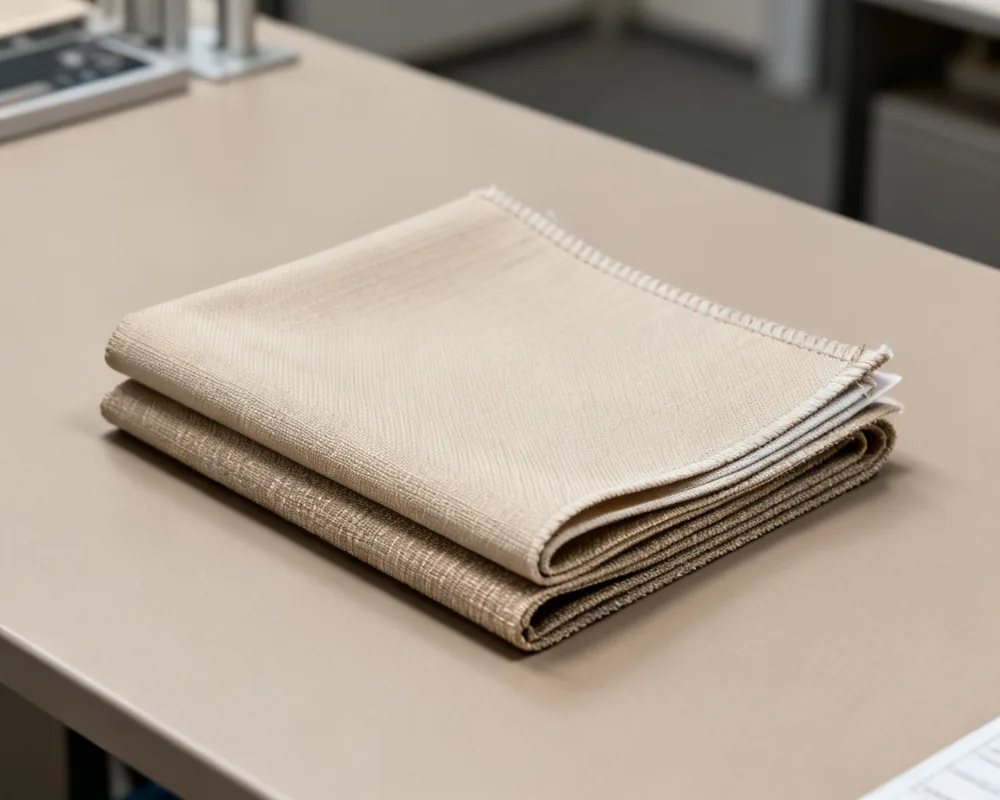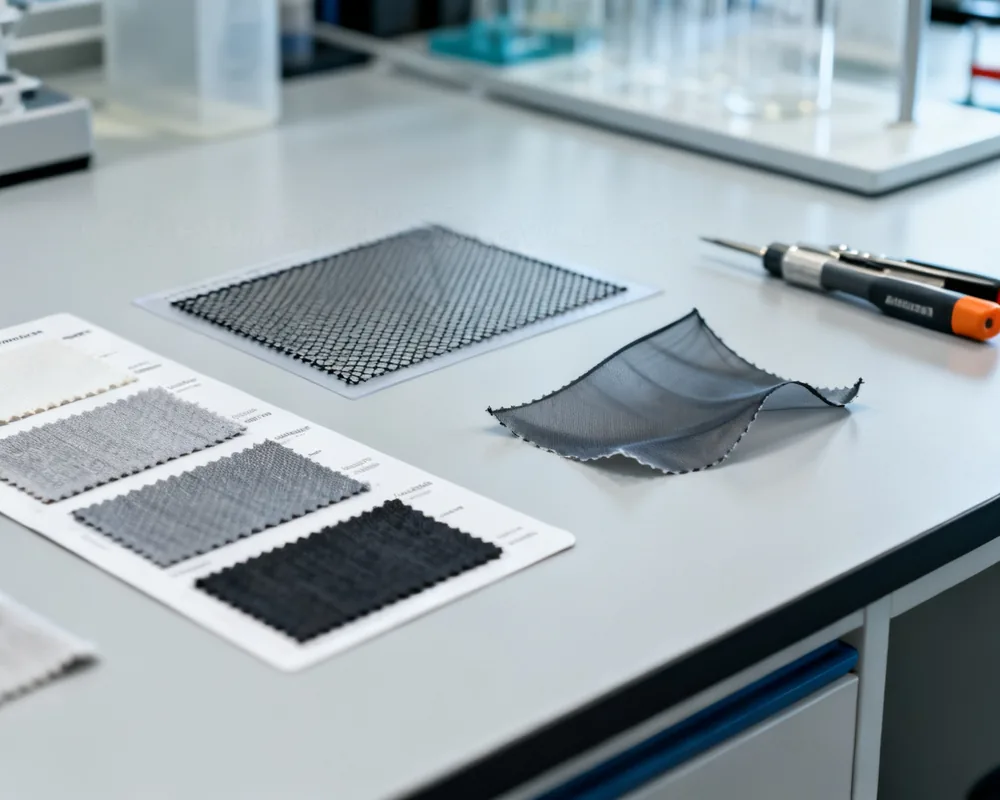
Evidence before comparison
These are discussion fields for a coated architectural textile, not measured values published for a named construction.
| Field | Target question | Evidence question |
|---|---|---|
| Composition | Identify the fibre blend and whether a coating or film is part of the build. | Review the declaration that belongs to this reference. |
| GSM | Agree a mass target and tolerance in grams per square metre. | Confirm the specimen, the method, and whether coating mass is included. |
| Usable width | Separate the cuttable area from the selvedge on the roll. | Confirm the width agreement at roll level, not from a small swatch alone. |
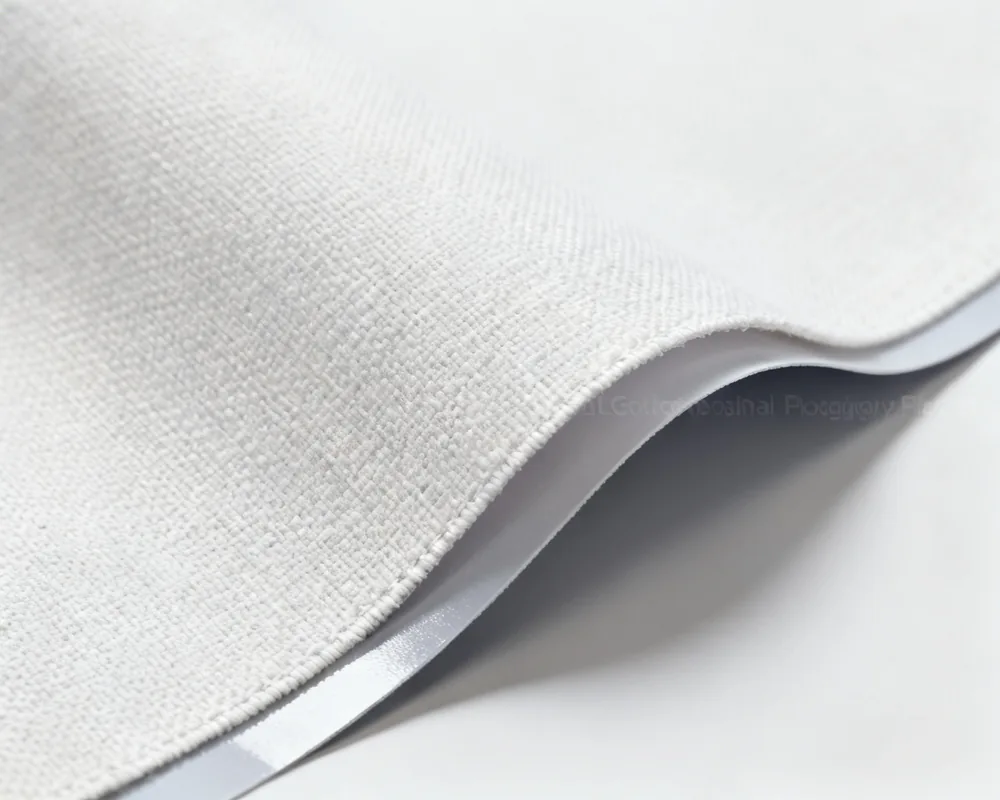
| Finish | Describe the surface finish, backing, and bonding only where that build applies. | Check sample state before comparing handle, weldability, or weathering notes. |
Keep the unit on the same line as the field. Mass is discussed in g/m². Usable width is the cuttable centimetres, with the selvedge excluded. Composition is a percentage by mass, and the stated parts should sum to 100. When the construction is described with a yarn, linear density is written in dtex or denier: 1 dtex is 1 gram per 10,000 metres, and 1 denier is 1 gram per 9,000 metres. A conditioning note can name ISO 139, the standard textile atmosphere of 20 °C and 65% relative humidity, including the tolerances printed in that standard. That citation records the atmosphere to request. It is not a measured result for a Serge Ferrari construction. A coating add-on and a laminated film also stay apart: add-on and adhesion on one side, film and peel behaviour on the other. An abrasion method does not describe handfeel.
Composition, construction, GSM, usable width, and finish